How AC Leak Repair Works in Miami
There are two very different types of AC leaks: refrigerant leaks and condensate water leaks. They require completely different repairs, carry different urgency levels, and cost different amounts. Here is what Miami homeowners need to know about both.
- Refrigerant leaks require licensed technicians — it is federal law
- Water leaks from drain lines are common in Miami's humid climate
- Ignoring water leaks risks ceiling and drywall damage
- $0 service call fee with any repair from Rocket HVACR
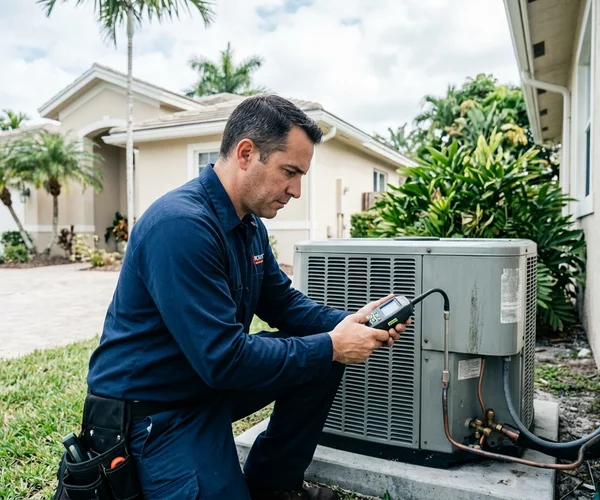
Two Types of AC Leaks — Two Very Different Situations
When a homeowner says their AC is leaking, they might mean two completely different things. The first is a refrigerant leak — an invisible escape of the chemical that makes cooling possible, detectable only by trained technicians with specialized equipment. The second is a condensate water leak — water dripping from the indoor unit or overflowing from the drain pan, visible and often discovered by the puddle it leaves behind.
Both types of leaks are common in Miami-Dade. Refrigerant leaks develop over time due to vibration, corrosion, and connections loosening under thermal cycling — all of which happen faster in a system that runs year-round. Condensate water leaks are nearly epidemic in South Florida because the combination of high indoor humidity and year-round operation provides perfect conditions for algae growth in drain lines.
The distinction matters because the repairs are completely different. A refrigerant leak requires EPA-certified technicians and specialized leak detection equipment. A condensate drain clog often requires nothing more than a flush — though the water damage it leaves behind may need attention. This guide covers both.
Refrigerant Leaks: Detection, Repair, and Legal Requirements
How Refrigerant Leak Detection Works
Refrigerant is invisible and odorless. Detecting a leak requires electronic leak detectors, UV dye injection and UV light inspection, or nitrogen pressure testing of the refrigerant circuit. Electronic detectors are the most common first step — a technician moves the probe systematically along refrigerant lines, the evaporator coil, and connection points. A UV dye test involves injecting fluorescent dye into the system and inspecting under UV light after the system runs.
Federal law under Section 608 of the Clean Air Act requires that refrigerant leaks on systems of 50 pounds or more must be repaired within 30 days of detection. For residential split systems — which use much less refrigerant — the legal prohibition is on intentionally venting refrigerant to the atmosphere. A contractor who simply adds refrigerant without finding the leak is releasing refrigerant through the ongoing leak, which violates EPA regulations.
After the leak is located, the repair method depends on its location. Small leaks at connections are often repairable by tightening or resoldering the fitting. Coil leaks — particularly in the evaporator coil — are more complex and expensive. A severely corroded or pitted coil may need full replacement. Once the leak is sealed, the system is pressure-tested, then evacuated with a vacuum pump, and finally recharged to the manufacturer's specified refrigerant level.
Condensate Water Leaks: Miami's Most Common AC Problem
Every air conditioner removes moisture from the air as part of the cooling process. In Miami-Dade, where humidity regularly exceeds 80 percent, a properly functioning system can remove several gallons of water per day. That water flows through a condensate drain line to the exterior or a floor drain. When algae grows in the drain line — which happens rapidly in warm, humid conditions — the line clogs and water backs up into the drain pan, eventually overflowing.
The consequences of an overflowing drain pan range from annoying to serious. At minimum, you have a puddle under the air handler. In homes with the air handler in a closet or attic, an overflowing pan can cause significant ceiling, wall, and flooring damage before it is discovered. Mold growth in the affected area is a secondary risk, particularly relevant given Miami's humidity. Some systems include float switches that shut the system off when the drain pan fills — if your system stopped cooling and you find water, this may be why.
Fixing a condensate drain clog typically involves flushing the drain line with water pressure, a shop vac, or a specialized drain cleaning tool. Preventive maintenance — which should be part of every annual tune-up — includes flushing the drain line and sometimes adding algae prevention tablets. If you are getting repeat clogs, a condensate pump upgrade or drain line rerouting may be the permanent solution.
Recognizing Each Type of Leak
The symptoms of a refrigerant leak and a water leak are different enough to distinguish before calling for service.
Warm Air Despite System Running
If the system is running but not cooling, and there is no visible water, a refrigerant leak is a likely cause. Low refrigerant reduces cooling capacity before eliminating it entirely.
Higher Electric Bills Without Explanation
A refrigerant leak forces the compressor to work harder to achieve the same cooling output. The efficiency loss shows up as increased power consumption on your FPL bill.
Ice on Refrigerant Lines or Indoor Unit
Frosting on the copper refrigerant lines or the air handler housing often indicates low refrigerant causing the evaporator coil to drop below freezing. Shut the system off and schedule service.
Water Pooling Near the Indoor Unit
Visible water under or near the air handler is almost always a condensate water issue — either a clogged drain line or a cracked drain pan. Schedule service before water damage progresses.
System Shut Off Unexpectedly
Many modern systems include float switches that stop the system when the condensate pan fills. If your AC stopped with no apparent cause, check for water in the drain pan before calling.
Hissing Sound Near the Refrigerant Lines
A hissing or bubbling sound near the copper lines or the indoor coil area can indicate refrigerant escaping. This requires immediate professional inspection.
Miami Homeowners on Rocket HVACR Leak Repair
AC Leak Repair Questions
Related Guides and Services
-
AC Repair Service
Schedule professional AC leak repair with Rocket HVACR. $0 service call with repair. EPA-certified technicians.
-
Why Is My AC Not Blowing Cold Air?
Refrigerant leaks are a leading cause of reduced cooling. Learn all the causes and how to diagnose them.
-
AC Compressor Replacement Cost
When a refrigerant leak is severe enough that replacement makes more sense, understand the full cost picture.
-
How Often Should You Get an AC Tune-Up?
Regular tune-ups include drain line flushing and refrigerant level checks — preventing most leaks before they cause damage.
-
Signs You Need AC Replacement
When a leak repair cost is not justified on an aging system, here is how to make the replacement decision.
AC Leaking in Miami? Rocket HVACR Can Help Today
Whether it is a refrigerant leak or a water drain issue, Rocket HVACR's licensed technicians diagnose and repair both. $0 service call fee with any repair. 24/7 emergency availability. First-time customers save $50.
Schedule Leak RepairOr call us directly: (786) 716-1245